
Manali Travel Guide 2027: Places to Visit, Weather by Month, Itinerary and How to Reach

Quick answer: This Manali travel guide covers everything you need to plan a trip. Manali is a resort town at the northern end of the Kullu Valley in Himachal Pradesh, at about 2,050 metres on the Beas River. The main sights are the Hidimba Devi Temple, Vashisht hot springs, Solang Valley, Naggar Castle, the Atal Tunnel and Rohtang Pass. Snow falls mainly between December and the beginning of March. Rohtang Pass is open from May to November. The nearest airport is at Bhuntar, about 50 km away.
Manali works for almost every kind of trip. Families come for the snow and Solang Valley, couples for the cedar forests and old temples, trekkers for routes such as Hampta Pass and Bhrigu Lake, and road-trippers as the gateway to Lahaul, Spiti and Ladakh through the Atal Tunnel. This guide puts all of it in one place: what to see, what to do in each season, the weather month by month, how to get there, ready-made itineraries and the rules that catch first-time visitors out. Every fact has been checked against the sources listed at the end.
Manali at a Glance
| District | Kullu, Himachal Pradesh |
|---|---|
| Altitude | About 2,050 m |
| River | Beas (Manali stands at the northern end of the Kullu Valley, which the Beas forms) |
| Distance from Shimla | About 270 km |
| Distance from New Delhi | About 544 km |
| Nearest airport | Kullu-Manali Airport (KUU), Bhuntar, about 50 km |
| Nearest railheads | Joginder Nagar (narrow gauge, 147 km); Una (broad gauge, 250 km) |
| Snow season | Mainly December to the beginning of March |
| Rohtang Pass | Open May to November; vehicle permit needed |
Manali Travel Guide: History and Setting
Manali is a resort town near Kullu town in the Kullu district of Himachal Pradesh. It sits at the northern end of the Kullu Valley, which is formed by the Beas River, about 270 km north of the state capital Shimla. The town is named after Manu, the figure Hindu tradition regards as the creator of mankind, and the Manu Temple in the town is dedicated to him.
In medieval times the area was part of the Kullu principality, and enduring temples such as the 16th-century Hidimba Devi Temple date from that period. Under British rule in the 19th and early 20th centuries, Manali began to emerge as a hill retreat, and orchard cultivation took hold in the valley.
New to the state? Our Himachal Pradesh travel guide explains the regions, seasons and routes, and our places to visit in Himachal Pradesh list helps you decide what to combine with Manali.
Places to Visit in Manali
Most of Manali’s sights fall into three groups: the old temples in and around town, the side valleys and passes to the north, and the heritage village of Naggar down the valley. Here they are in the order most visitors see them.
Hidimba Devi Temple
The Hidimba Devi Temple, locally known as the Dhungari Temple, is one of Manali’s main sights. It is dedicated to Hidimbi Devi, wife of Bhima in the Mahabharata, and was built in 1553 by Maharaja Bahadur Singh. The pagoda-style wooden shrine stands 24 metres tall and is built over a large rock that was worshipped as an image of the deity. It is surrounded by a cedar forest called Dhungiri Van Vihar, so plan a slow walk through the trees rather than a quick stop.
Mall Road
Mall Road is Manali’s main shopping street and a convenient first-evening stop.
Vashisht and its hot springs
Vashisht is a village about 3 km from Manali across the River Beas. It is famous for its sulphurous hot water springs and for three main temples dedicated to Vashisht, Shiva and Rama, built next to the springs. Above the village are local houses and apple orchards.
Jogini Falls
Jogini Falls is a waterfall to the north of Vashisht village, marking the village’s upper boundary, with the Jogini Mata Temple near the falls. It pairs naturally with a morning at the Vashisht springs.
Manu Temple
The Manu Temple is an ancient shrine dedicated to Maharishi Manu. The town itself is named after Manu.
Solang Valley
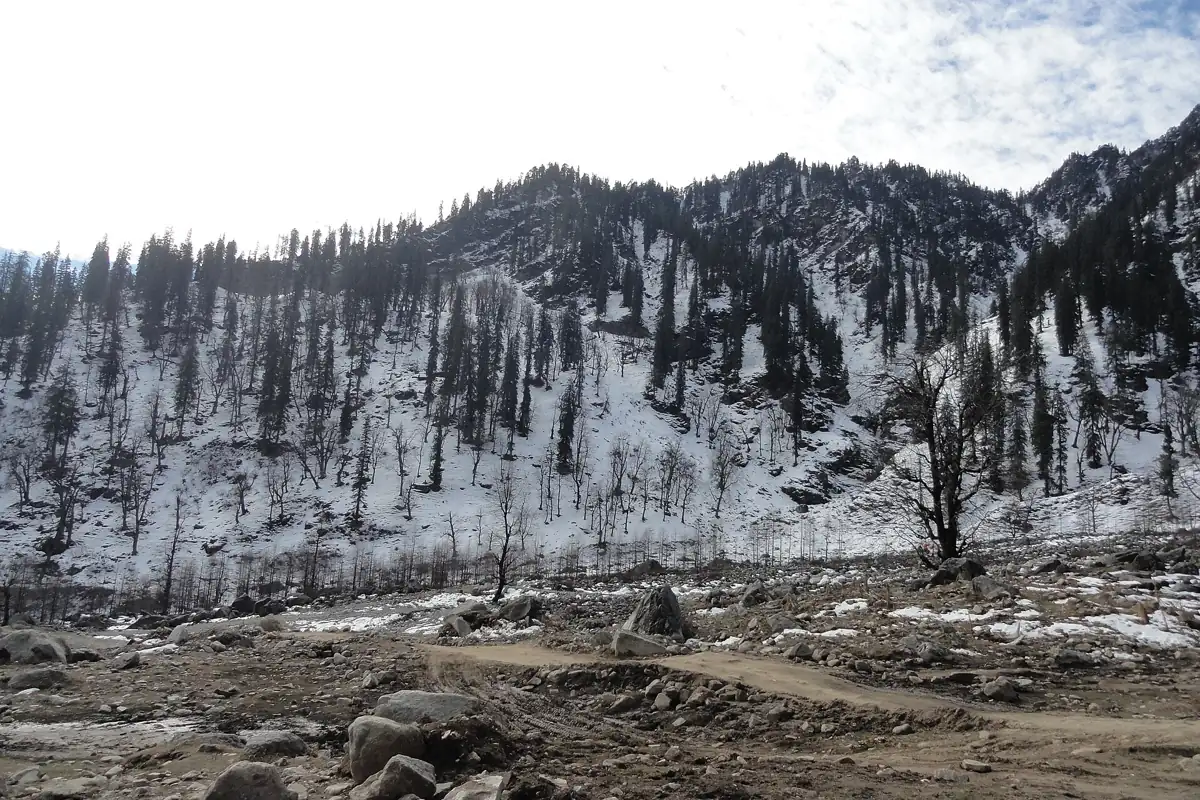
Solang Valley is a side valley at the top of the Kullu Valley, 14 km northwest of Manali on the way to Rohtang Pass. It is known for both summer and winter sports. In winter, ski agencies offering courses and equipment operate here. Once the snow melts from May, skiing gives way to zorbing, paragliding, parachuting and horse riding. Temperatures here range from about −12 °C to 25 °C over the year, so dress for the season.
Atal Tunnel and Sissu
The 9.02 km Atal Tunnel runs under Rohtang Pass and gives all-weather road access between Manali and the Lahaul-Spiti valley. Its south portal is 25 km from Manali at 3,060 metres, and its north portal is near Sissu in Lahaul at 3,071 metres. The tunnel cuts the road distance between Manali and Leh by 46 km.
Rohtang Pass
Rohtang Pass, at 3,980 metres and about 51 km from Manali, connects the Kullu Valley with Lahaul and Spiti. The pass is open from May to November; snow closes the road over it from November to May. Every tourist vehicle needs an online permit (see the permit section below).
Naggar Castle and the Roerich estate
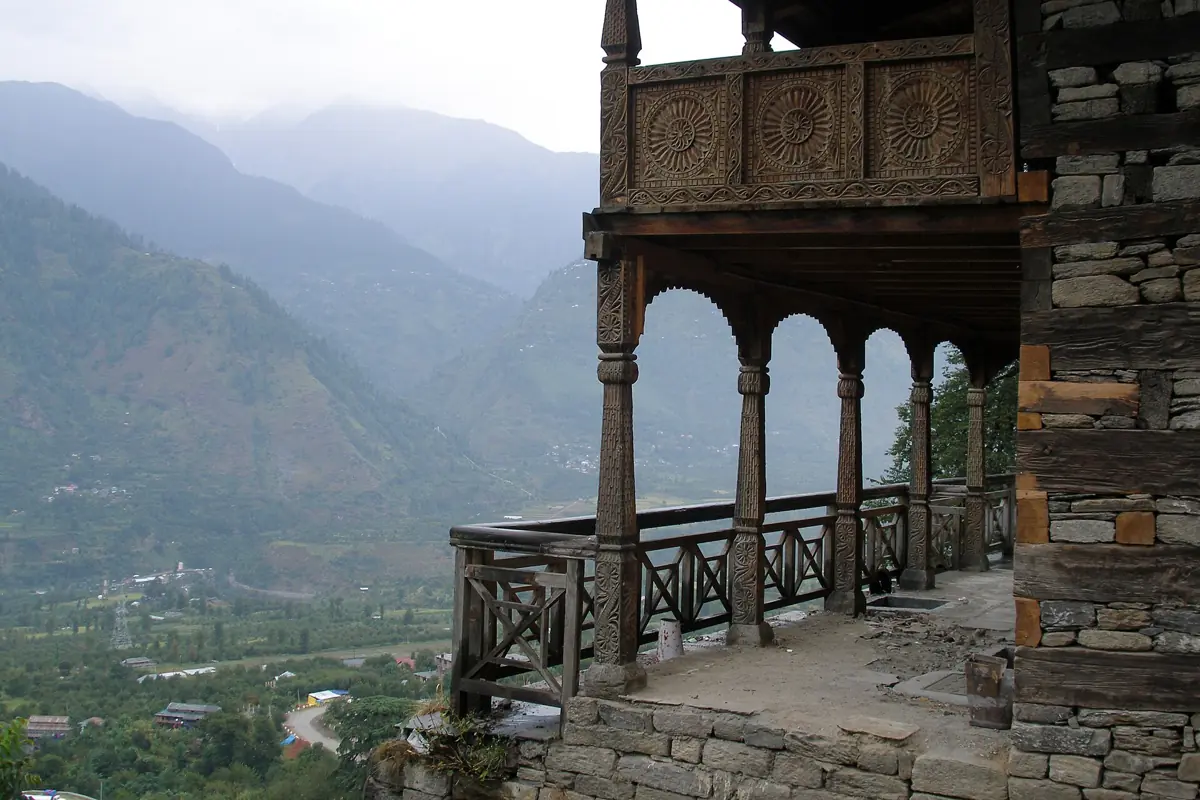
Naggar Castle is a medieval castle in Kullu district, built by Raja Sidh Singh of Kullu around 1460 AD. It was the official seat of kings for centuries, and since 1978 the Himachal Pradesh Tourism Development Corporation (HPTDC) has run it as a heritage hotel. Naggar is also where the Russian painter Nicholas Roerich lived his last years. He died there on 13 December 1947, and the Roerich Hall Estate in Naggar holds a collection of his work.
Things to Do in Manali
What you can do in Manali depends mostly on the month. Use this table to match activities to your travel dates.
| Activity | Where | When | Good to know |
|---|---|---|---|
| Skiing | Solang Valley | Winter | Ski agencies with courses and equipment operate only in winter |
| Paragliding, zorbing, horse riding | Solang Valley | From May, after the snow melts | The slopes switch from skiing to summer sports |
| Hot springs | Vashisht, 3 km away | All year | Sulphurous springs beside the temples |
| Drive through the Atal Tunnel | 25 km to the south portal | All year, road conditions permitting | All-weather access to Lahaul |
| Rohtang Pass | 51 km | May to November | Online vehicle permit required |
| Treks | Bhrigu Lake, Hampta Pass | Once snow has cleared from the route | High-altitude routes; go with a guide if new to trekking |
| Kullu Dussehra | Kullu | October | Starts on Vijay Dashmi and lasts seven days |
Treks from Manali
Bhrigu Lake trek
Bhrigu Lake is a high-altitude lake at around 4,300 metres in Kullu district, east of Rohtang Pass and around 6 km from Gulaba village. You can trek to it either from the Vashisht temple near Manali or from Gulaba, on the way to Rohtang Pass. The lake is named after the sage Bhrigu, who, according to legend, meditated near it.
Hampta Pass trek
Hampta Pass, at 4,270 metres, is a corridor between the Kullu Valley and the Chandra Valley in Lahaul, named after Hampta village below Sethan. Hikers cross from the Kullu Valley into Lahaul on a route that includes glaciers and fast-flowing rivers, with peaks such as Deo Tibba and Indrasan around the route. Most itineraries drive from Manali to Jobri, where the trek begins, and the crossing typically takes 3 to 4 days. Wildflowers and herbs grow between 3,000 and 3,800 metres along the way.
Both routes go well above 3,000 metres, so acclimatise first. Altitude sickness usually gets better with rest, but it can sometimes be life-threatening; go up slowly, drink enough water, avoid alcohol and get medical help if a headache, nausea or dizziness gets worse.
Manali Weather by Month
Manali has warm summers, a wet monsoon in July and August, and cold winters with snow. These India Meteorological Department averages (1991–2020) show what to expect each month:
| Month | Average high | Average low | Rain/snow (mm) |
|---|---|---|---|
| January | 11 °C | −1 °C | 90 |
| February | 12 °C | 0 °C | 114 |
| March | 17 °C | 3 °C | 155 |
| April | 21 °C | 6 °C | 88 |
| May | 25 °C | 9 °C | 66 |
| June | 26 °C | 13 °C | 90 |
| July | 26 °C | 16 °C | 202 |
| August | 25 °C | 16 °C | 217 |
| September | 24 °C | 12 °C | 123 |
| October | 22 °C | 6 °C | 25 |
| November | 17 °C | 3 °C | 31 |
| December | 14 °C | 0 °C | 39 |
Three things stand out. July and August are the wettest months by far, so expect rain and possible road disruption. October and November are the driest months. December to February bring sub-zero nights, which is when snow settles in and around town. Read our full guide to snowfall in Manali for snow-specific planning.
Best Time to Visit Manali
The best time to visit Manali depends on what you want from the trip:
| If you want | Go in | Why |
|---|---|---|
| Snow | December to early March | Manali’s snowfall comes mainly in this window |
| Skiing | Winter | Ski operators at Solang work only in winter |
| Rohtang Pass | May to November | The pass is open in these months |
| Paragliding and summer sports | From May | Solang switches to summer activities after the snow melts |
| Dry, clear weather | October and November | The lowest monthly rainfall of the year (25 and 31 mm) |
| Kullu Dussehra | October | The festival starts on Vijay Dashmi and lasts seven days |
How to Reach Manali
Most visitors reach Manali by road, because there is no railhead close to the town. The quick version:
- By air: Kullu-Manali Airport (KUU) at Bhuntar is about 50 km from Manali.
- By train: the nearest narrow-gauge station is Joginder Nagar (147 km). The nearest broad-gauge stations are Una (250 km), Kiratpur Sahib (268 km), Kalka (275 km), Chandigarh (310 km) and Pathankot (325 km).
- By bus: HRTC (Himachal Road Transport Corporation), HPTDC and private operators run buses to Manali.
For routes, highways and practical tips, see our detailed guide on how to reach Manali.
Manali Itinerary: 2, 3 and 5 Days
2 days in Manali
- Day 1: Hidimba Devi Temple and the Dhungiri cedar forest in the morning, the Manu Temple, then Mall Road in the evening.
- Day 2: Vashisht hot springs and the walk up to Jogini Falls, then Solang Valley (14 km) in the afternoon.
3 days in Manali
- Days 1–2: as above.
- Day 3: drive through the Atal Tunnel (south portal 25 km away) to Sissu in Lahaul. Between May and November, swap this for Rohtang Pass if you have a permit.
5 days in Manali and the Kullu Valley
- Days 1–3: as above.
- Day 4: Naggar Castle and the Roerich Hall Estate.
- Day 5: head down the valley to Kasol and the Parvati Valley. See our Kasol travel guide.
Trekkers can replace days 4 and 5 with the Bhrigu Lake trek, or allow 3 to 4 days for Hampta Pass.
Where to Stay in Manali
Choose your base by what you plan to do most:
- Around Mall Road: best for first-time visitors who want to stay in the centre of town.
- Vashisht: a village setting 3 km from town, close to the hot springs and the Jogini Falls walk.
- Near the Hidimba Devi Temple: quieter, among the cedar forest of Dhungiri Van Vihar.
- Naggar: for a heritage stay, Naggar Castle has been run as a heritage hotel by HPTDC since 1978.
Shopping and Festivals
Kullu shawls
The Kullu shawl is the valley’s signature buy. It is known for geometric patterns and bright colours, and it is made in yak wool, sheep wool and Pashmina, among other materials. The patterned style developed after craftspeople from Bushahr arrived in the early 19th century; before that, local Kulivi weavers made plain shawls.
Kullu Dussehra
Kullu Dussehra is held in October and begins on Vijay Dashmi and continues for seven days. The tradition goes back to the 17th century, when King Jagat Singh installed an idol of Raghunath on his throne and Raghunath became the ruling deity of the valley. The festival dates from 1606, and the state government has given it international festival status. Book stays well ahead if your dates overlap.
Rohtang Pass Permit Rules
Every vehicle visiting Rohtang Pass for tourism needs a permit from the official portal, rohtangpermits.hp.gov.in. The key rules:
- Permits are issued online in two time windows, at 10:00 and 16:00.
- You can apply only for the next 2 days.
- A car or jeep pays a ₹500 permit fee plus a ₹50 congestion charge. The congestion charge applies to all vehicles crossing Gulaba Bridge.
- Carry a valid ID and a valid PUC certificate. The vehicle must be no more than 10 years old.
- A printout of the permit is compulsory.
Manali Travel Tips
- In winter, check road status every morning before driving towards Solang, the Atal Tunnel or beyond, and carry snow chains if you drive yourself.
- In July and August, the wettest months, keep a spare day in case roads are disrupted.
- Be at your screen when the 10:00 or 16:00 Rohtang permit window opens.
- Dress in layers. Even in May the average low is 9 °C, and January nights average below freezing.
- Combine Manali with Kullu, Naggar and the Parvati Valley rather than staying only in town.
- Comparing mountain destinations across India? See our list of popular hill stations in India.
- For a longer Himachal trip, add Shimla or Dharamshala.
Manali Travel FAQs
What is the best time to visit Manali?
December to early March for snow, May to November for Rohtang Pass, from May for paragliding at Solang, and October to November for the driest weather.
Which is the nearest railway station to Manali?
Joginder Nagar is the nearest narrow-gauge station, 147 km away. The nearest broad-gauge station is Una, 250 km away.
Which airport is closest to Manali?
Kullu-Manali Airport (KUU) at Bhuntar, about 50 km from Manali.
How far is Solang Valley from Manali?
About 14 km northwest of Manali, on the way to Rohtang Pass.
Is Rohtang Pass open in winter?
No. The pass is open from May to November; snow closes the road over it from November to May.
How old is the Hidimba Devi Temple?
It was built in 1553 by Maharaja Bahadur Singh.
How far is Vashisht from Manali?
About 3 km, across the River Beas.
How many days are enough for Manali?
Two days cover the town and Solang Valley, three days add the Atal Tunnel or Rohtang Pass, and five days add Naggar and the Parvati Valley.
Photos: Hidimba Devi Temple by Gerd Eichmann (CC BY 4.0); Solang Valley by Vikas Choudhary (CC BY-SA 4.0); Naggar Castle by Vyacheslav Argenberg (CC BY 4.0); all via Wikimedia Commons.
Last verified: November 2026 by the Tourtravelinfo Team. Roads, permits and fees change; check the official sources below before you travel.
- Rohtang Pass permits portal, Government of Himachal Pradesh
- Airports Authority of India: Kullu-Manali (Bhuntar) Airport
- New India Samachar (PIB): Atal Tunnel
- Manali (Wikipedia, climate data from the India Meteorological Department)
- Hidimba Devi Temple, Vashisht, Solang Valley, Rohtang Pass (Wikipedia)
- Naggar Castle, Nicholas Roerich, Bhrigu Lake, Hampta Pass (Wikipedia)
- Kullu Dussehra, Kullu shawl (Wikipedia)
- NHS: Altitude sickness