
Places to Visit in Himachal Pradesh: 25 Places by Region, with Altitudes and Facts

Quick answer: The main places to visit in Himachal Pradesh are Shimla, Manali, Dharamshala and McLeod Ganj, Kasol and the Parvati Valley, Dalhousie and Khajjiar, Kasauli, Bir Billing, Chitkul in Kinnaur, and the Spiti Valley with Key, Tabo and Chandratal. History lovers should add Kangra Fort and the 8th-century Masrur rock-cut temples. Below, 25 places are grouped by region, each with its altitude, what it is known for and a link to a full guide.
Choosing where to go in Himachal is easier once you see the state by region. The Shimla hills and Kasauli are closest to Chandigarh. The Kullu Valley holds Manali and the Parvati Valley. The Kangra Valley has Dharamshala, the forts and the temples. Chamba has Dalhousie and Khajjiar, and the far north-east has Kinnaur and Spiti. This list covers the main tourist places in Himachal Pradesh, region by region, with verified facts so you can compare them quickly. Every fact is checked against the sources listed at the end.
Places to Visit in Himachal Pradesh: Quick Comparison
| Place | District | Altitude | Known for |
|---|---|---|---|
| Shimla | Shimla | 2,376 m | Summer capital, The Ridge, toy train |
| Kufri | Shimla | – | Resort hill station 12 km from Shimla |
| Narkanda | Shimla | 2,708 m | Skiing in winter, Hatu Peak |
| Chail | Solan | 2,250 m | Chail Palace, cricket ground |
| Kasauli | Solan | 1,800 m | Colonial cantonment near Chandigarh |
| Manali | Kullu | 2,050 m | Hidimba Devi Temple, Solang Valley |
| Naggar | Kullu | – | Medieval castle, Roerich estate |
| Kasol | Kullu | 1,580 m | Parvati Valley, trek base |
| Manikaran | Kullu | 1,760 m | Hot springs, gurdwara |
| Tosh | Kullu | 2,400 m | Village above the Parvati River |
| Dharamshala | Kangra | 1,457 m | Winter capital, Tibetan culture |
| Triund | Kangra | 2,800–2,900 m | Day hike above McLeod Ganj |
| Bir Billing | Kangra | – | Paragliding |
| Dalhousie | Chamba | 1,970 m | Hill station across five hills |
| Khajjiar | Chamba | 1,920 m | “Mini Switzerland of India” |
| Chitkul | Kinnaur | 3,450 m | Last village of the Baspa Valley |
| Kaza | Lahaul and Spiti | 3,650 m | Spiti’s main town |
| Key Monastery | Lahaul and Spiti | 4,166 m | Spiti’s largest monastery |
| Kibber | Lahaul and Spiti | 4,270 m | High village, snow leopard sanctuary |
| Chandratal Lake | Lahaul and Spiti | 4,250 m | High-altitude Ramsar wetland |
Shimla, Kufri, Narkanda and Chail
1. Shimla
Shimla is the summer capital and largest city of Himachal Pradesh, at about 2,376 metres. It became the summer capital of British India in 1864, and its centre around The Ridge, Mall Road and Christ Church still reflects that history. The Kalka-Shimla Railway, part of UNESCO’s Mountain Railways of India listing since 2008, ends here. Full guides: Shimla travel guide and places to visit in Shimla.
2. Kufri
Kufri is a resort hill station in Shimla district, 12 km from Shimla on National Highway 5, and the closest day trip from the city.
3. Narkanda
Narkanda sits at about 2,708 metres on the Indo-Tibet Road (NH 5), about 60 km from Shimla. It is a skiing resort in winter, and Hatu Peak is 8 km away.
4. Chail
Chail, at about 2,250 metres, is 44 km from Shimla. The Chail Palace was a summer retreat for the Maharaja of Patiala, and the Chail Cricket Ground, built in 1893 at 2,444 metres, is described as the highest cricket ground in the world.
Kasauli
5. Kasauli
Kasauli is a town and cantonment in Solan district at about 1,800 metres. The British established the cantonment in 1842, and it is only 58 km from Chandigarh and 77 km from Shimla, which makes it a quick hill escape from the plains.
Manali, Solang and Naggar
6. Manali
Manali sits at the northern end of the Kullu Valley at about 2,050 metres. The Hidimba Devi Temple there was built in 1553 by Maharaja Bahadur Singh and stands in a cedar forest. Full guide: Manali travel guide.
7. Solang Valley
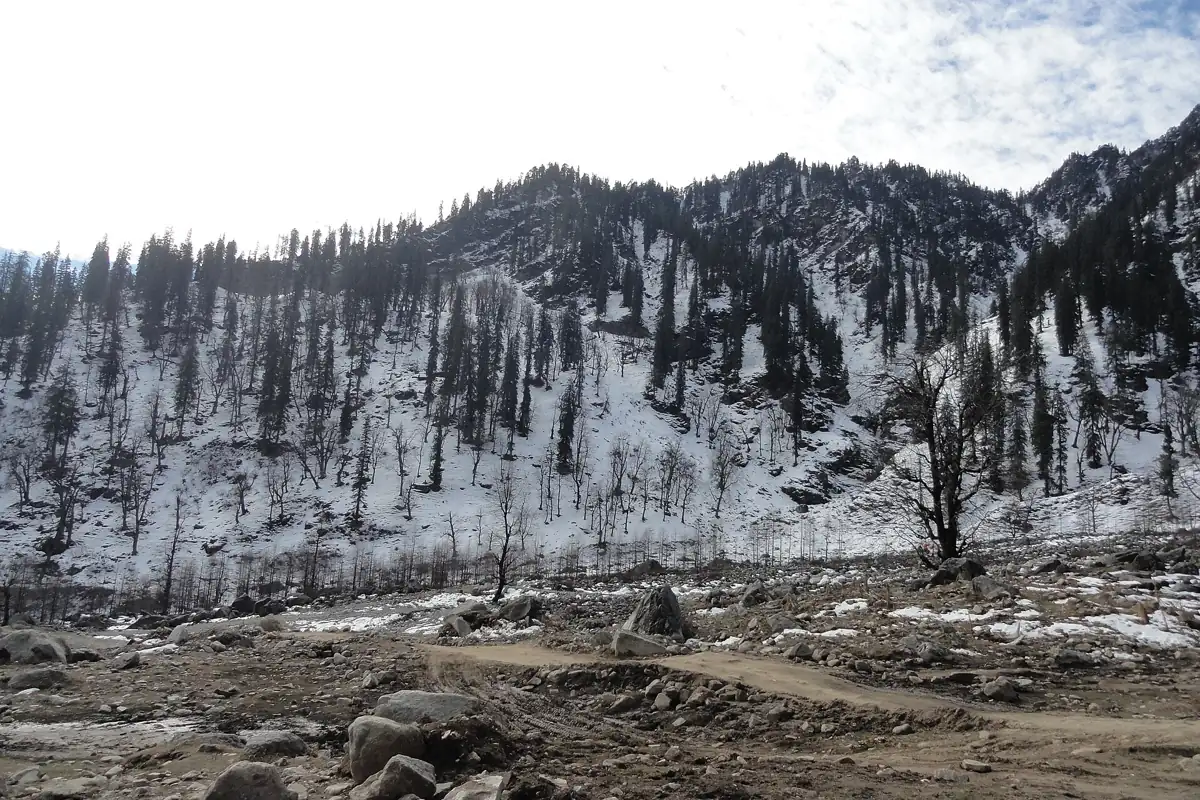
Solang Valley, 14 km northwest of Manali, is known for skiing in winter and for paragliding, zorbing and horse riding once the snow melts from May.
8. Atal Tunnel and Rohtang Pass
The 9.02 km Atal Tunnel gives all-weather road access from Manali to the Lahaul-Spiti valley. Rohtang Pass, at 3,980 metres and about 51 km from Manali, is open from May to November and needs an online vehicle permit.
9. Naggar
Naggar Castle was built by Raja Sidh Singh of Kullu around 1460 AD and has been run as a heritage hotel by HPTDC since 1978. The Russian painter Nicholas Roerich died at Naggar in 1947, and the Roerich Hall Estate there holds a collection of his work.
Kasol and the Parvati Valley
10. Kasol
Kasol is a hamlet on the Parvati River at about 1,580 metres and the base for treks to Malana and Kheerganga. It is nicknamed “Mini Israel” for its many Israeli visitors. Full guide: Kasol travel guide.
11. Manikaran
Manikaran, about 4 km from Kasol at around 1,760 metres, is a pilgrimage town for Hindus and Sikhs known for its hot springs, which are used to cook the food served at the gurdwara.
12. Tosh and Malana
Tosh, at about 2,400 metres, is reached by bus to Barshaini and an hour’s hike. Malana, in a side valley, speaks its own Kanashi language and governs itself through a village council linked to its deity, Jamlu.
Dharamshala, McLeod Ganj and the Kangra Valley
13. Dharamshala and McLeod Ganj
Dharamshala is the winter capital of Himachal Pradesh, in the Kangra Valley under the Dhauladhar range. Its upper town, including McLeod Ganj, has been home to the 14th Dalai Lama and the Tibetan government-in-exile since 1960. Full guide: Dharamshala travel guide.
14. Triund
Triund is a meadow above McLeod Ganj at about 2,800 to 2,900 metres, reached by a well-marked trail from the Galu temple above Dharamkot, and is popular as a day hike.
15. Kangra Fort
Kangra Fort, 20 km from Dharamshala, is the largest fort in the Indian Himalayas and is protected by the Archaeological Survey of India.
16. Masrur rock-cut temples
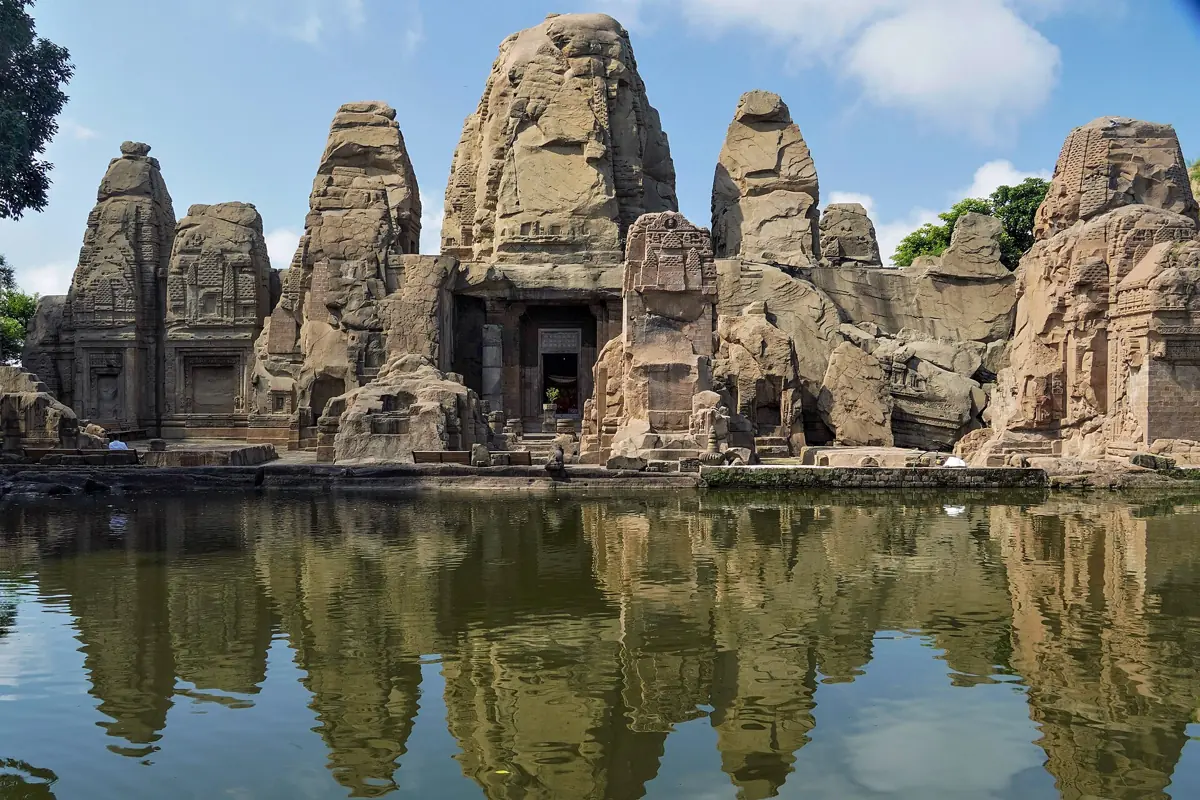
The Masrur Temples are an early 8th-century complex of rock-cut Hindu temples in the Kangra Valley, carved out of monolithic rock in the Nagara style.
17. Bir Billing
Bir, home to the Bir Tibetan Colony founded in the early 1960s, has become known as the paragliding capital of India.
Dalhousie and Khajjiar
18. Dalhousie
Dalhousie is a hill station in Chamba district spread across five hills at about 1,970 metres. It is 17 km from Khajjiar and 35 km from Chamba town.
19. Khajjiar
Khajjiar, at about 1,920 metres, is nicknamed the “Mini Switzerland of India” and combines lake, pasture and forest. In 1992 a Swiss envoy marked it as one of the places worldwide with a topographical resemblance to Switzerland.
Kinnaur
20. Chitkul and the Sangla Valley
Chitkul, at about 3,450 metres, is the last village of the Baspa Valley and the last village on the old Hindustan-Tibet trade route. It is also the last point in India you can travel to without a permit. From Karcham on NH 5, the road follows the Baspa Valley through Sangla and Rakchham to Chitkul.
Spiti Valley and Lahaul
21. Kaza
Kaza, at about 3,650 metres, is the main town of the Spiti Valley and has its only petrol pump. Full guide: Spiti Valley travel guide.
22. Key and Tabo monasteries
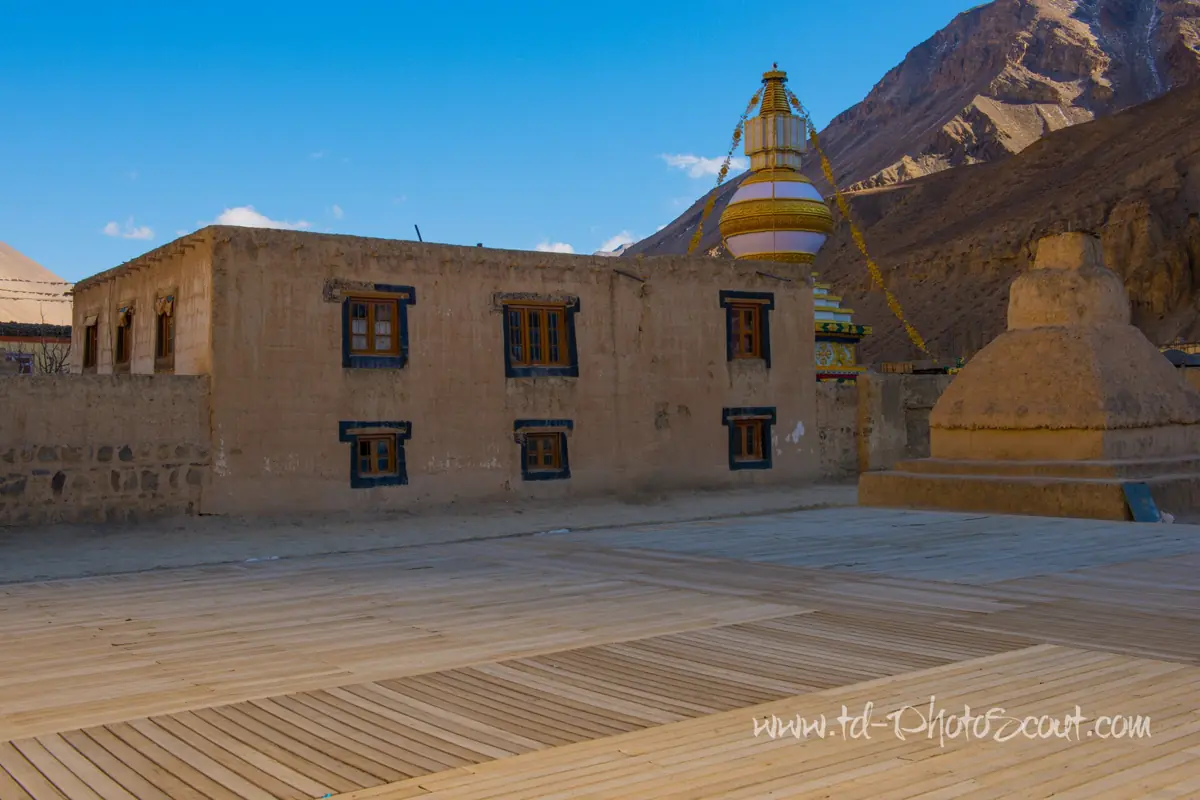
Key Monastery, at about 4,166 metres, is the largest monastery in the Spiti Valley. Tabo Monastery, founded in 996 CE, is noted as the oldest continuously operating Buddhist enclave in India and the Himalayas.
23. Kibber, Langza and Hikkim
Kibber, at about 4,270 metres, is one of the highest villages in the world inhabited year-round and the base for the Kibber Wildlife Sanctuary, home to about 30 snow leopards. Langza is the “fossil village” of Spiti, and Hikkim has a post office at 4,400 metres.
24. Chandratal Lake
Chandratal Lake, at about 4,250 metres, is frozen from December to March and reachable from late May to early October. It was designated a Ramsar wetland on 8 November 2005.
Himachal Tourism in Numbers
Tourism is central to the economy of the Kullu district, home to Manali, Kasol and the Parvati Valley. In 2024, Kullu was the most-visited district in Himachal Pradesh, with about 3.5 million tourist arrivals, of which 13,295 were foreign visitors. Expect the busiest tourist places in Himachal Pradesh, such as Manali, Solang and Kasol, to be crowded in peak summer and around holidays, and plan quieter alternatives such as Naggar, Tosh or Chail if you prefer fewer people.
Wildlife and World Heritage
25. Great Himalayan National Park
The Great Himalayan National Park Conservation Area in Kullu district was inscribed as a UNESCO World Heritage Site in 2014. Himachal’s other UNESCO listing is the Kalka-Shimla Railway, part of the Mountain Railways of India.
Best Places in Himachal for Every Kind of Trip
| If you have | Pick | Why |
|---|---|---|
| A weekend from Chandigarh | Kasauli or Shimla | Kasauli is 58 km away; Shimla 116 km |
| A week, first trip | Shimla, Manali and Kasol | Hill-station history, snow and the Parvati Valley in one loop |
| A week, culture and nature | Dharamshala, Dalhousie and Khajjiar | Tibetan culture, forts, temples and meadows |
| Ten days or more, adventure | Spiti via Kinnaur | Monasteries, high villages and Chandratal |
| Winter snow | Manali, Solang, Kufri, Narkanda | Manali’s snow comes mainly December to early March; Narkanda is a ski resort |
For seasons, routes and permits across the state, read the Himachal Pradesh travel guide, and for transport see how to reach Manali.
More Himachal Pradesh guides
- Himachal Pradesh Travel Guide 2027: Where to Go, When to Go and How to Get There
- Manali Travel Guide 2027: Places to Visit, Weather by Month, Itinerary and How to Reach
- Shimla Travel Guide 2027: Places to Visit, Day Trips, Weather and How to Reach
- Dharamshala Travel Guide 2027: McLeod Ganj, Triund, Weather and Places to Visit
- Kasol Travel Guide 2027: Parvati Valley, Manikaran, Malana, Kheerganga and How to Reach
- Spiti Valley Travel Guide 2027: Monasteries, Villages, Routes, Best Time and Itinerary
- How to Reach Manali: By Air, Train and Road, with Distances, Winter Tips and Onward Routes
Places to Visit in Himachal Pradesh: FAQs
Which is the highest place on this list?
Kibber, at about 4,270 metres, is the highest inhabited village here; Chandratal Lake lies at about 4,250 metres.
Which places on this list are closest to Chandigarh?
Kasauli is 58 km from Chandigarh, and Shimla is 116 km away.
Which places in Himachal are UNESCO World Heritage Sites?
The Kalka-Shimla Railway, part of the Mountain Railways of India since 2008, and the Great Himalayan National Park Conservation Area, inscribed in 2014.
Where can I see snow in Himachal Pradesh?
Manali and Solang Valley from December to early March, Shimla mostly in January or early February, and Narkanda, which is a ski resort in winter.
Why is Khajjiar called Mini Switzerland?
On 7 July 1992 a Swiss envoy marked Khajjiar as one of the places worldwide that bear a topographical resemblance to Switzerland.
When can you visit Chandratal Lake?
From late May to early October. The lake is frozen from December to March.
Photos: Chandra Taal campsite by Adarsh Patel (CC BY-SA 4.0); Solang Valley by Vikas Choudhary (CC BY-SA 4.0); Masroor temple by Dhruvaeng (CC BY-SA 4.0); Tabo Monastery by Tim Dellmann (CC BY 3.0); all via Wikimedia Commons.
Last verified: November 2026 by the Tourtravelinfo Team.
- Shimla, Kufri, Narkanda, Chail, Kasauli (Wikipedia)
- Manali, Hidimba Devi Temple, Solang Valley, Rohtang Pass, Naggar Castle, Nicholas Roerich (Wikipedia)
- Parvati Valley, Kasol, Manikaran, Tosh (Wikipedia)
- Dharamshala, Triund, Kangra Fort, Masrur Temples, Bir (Wikipedia)
- Dalhousie, Khajjiar, Chitkul (Wikipedia)
- Spiti, Kaza, Key Monastery, Tabo Monastery, Kibber, Langza, Hikkim, Chandra Taal (Wikipedia)
- UNESCO: Great Himalayan National Park Conservation Area; PIB: Atal Tunnel